
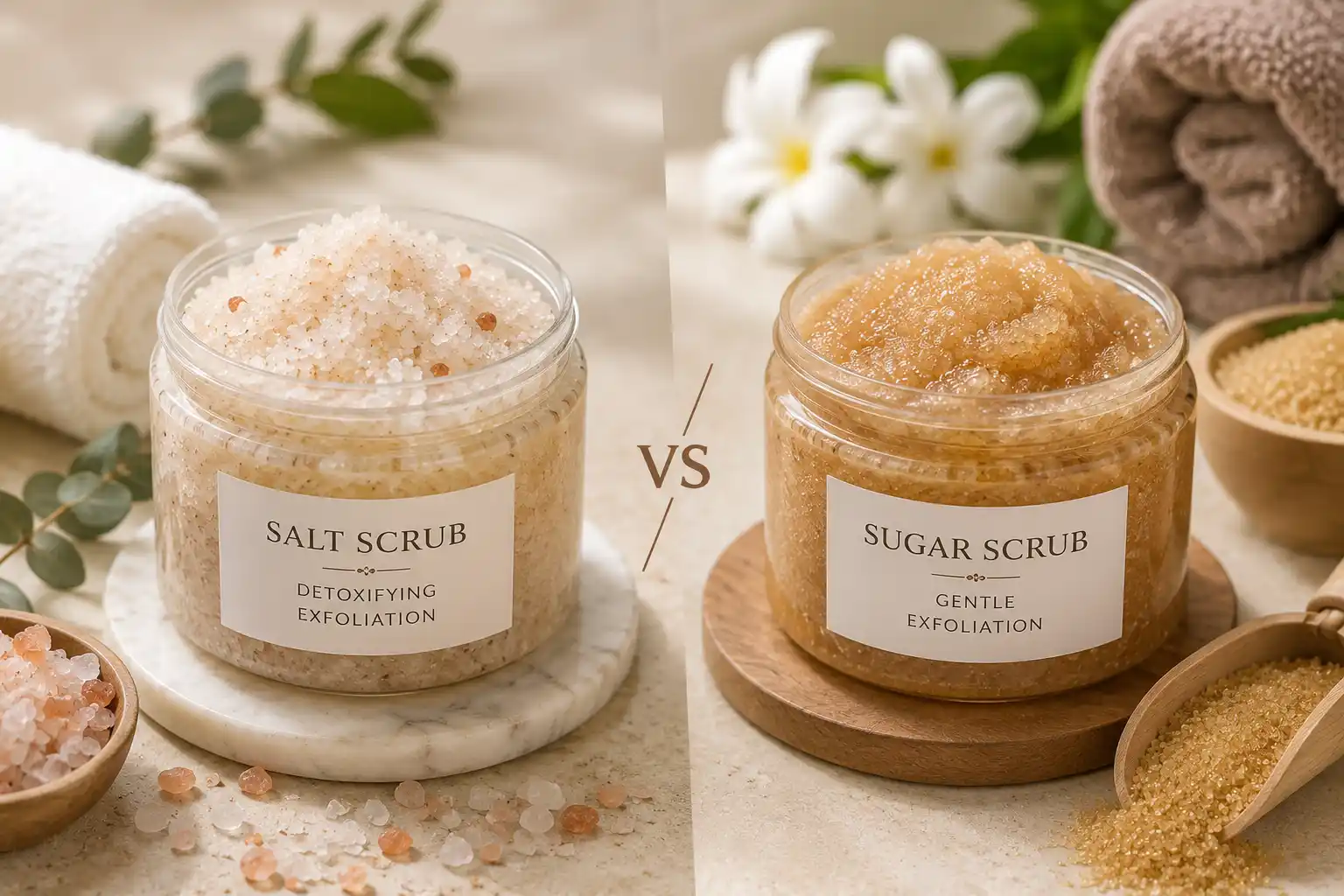
Salt Scrub vs Sugar Scrub
Walk into any wellness store in Mangalore and you’ll find shelves lined with body scrubs promising the same thing: smoother, brighter, more even-toned skin. Most of them boil down to one of two base ingredients — salt or sugar. They look similar in a jar, but they behave very differently on skin, and picking the wrong one for your skin type or the coastal Karnataka climate can leave you more irritated than glowing. This guide breaks down exactly how salt and sugar scrubs differ, which one suits your skin, and how exfoliation choices should shift with Mangalore’s humidity and monsoon patterns. It’s a small decision on the surface, but getting it right is often the difference between a scrub that leaves your skin genuinely smoother and one that leaves it tight, flaky, or reactive for days afterward.
What Body Exfoliation Actually Does
Before comparing the two, it helps to understand what exfoliation is doing beneath the surface. Every scrub, whatever its base ingredient, works by physically loosening and lifting away the outermost layer of dead skin cells that naturally accumulate on the body. This buildup is what makes skin look dull, feel rough, and resist absorbing moisturisers properly. Clearing it out reveals fresher skin underneath, improves texture, and helps other products — oils, lotions, tan treatments — actually penetrate rather than sit on the surface. If you want the fuller picture of how this fits into a professional body polishing session, our guide on what body polish treatment involves and why it matters covers the full process step by step. The scrub itself is only one part of that process — but it’s the part that determines how your skin feels afterward, which is why the salt-versus-sugar choice matters more than most people assume.
Salt Scrubs: Intensity and Detox
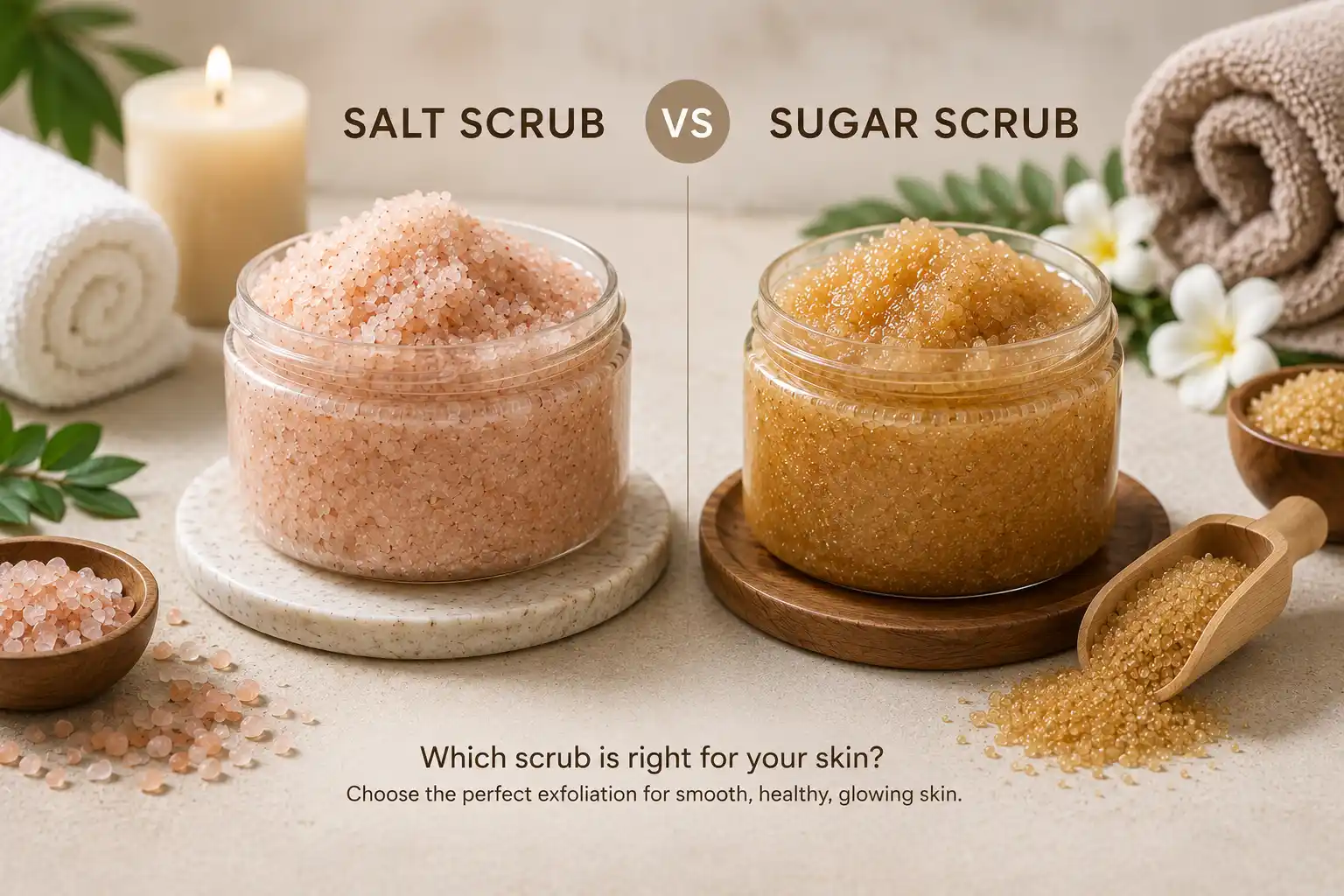
Salt scrubs, typically made from sea salt, Himalayan pink salt, or Dead Sea salt, are the more aggressive of the two exfoliants. The crystals are coarser and more angular, so they cut through thicker, rougher patches of skin more efficiently. This makes salt the go-to choice for areas that take a beating year-round heels, elbows, knees, and the soles of the feet where dead skin builds up faster than anywhere else on the body.
Beyond the physical scrubbing action, salt carries genuine mineral content. Magnesium, potassium, and calcium in sea salt are widely credited with supporting circulation and giving skin a temporary refreshed, toned appearance after a session. Salt is also mildly antibacterial, which is part of why it’s traditionally associated with a “detoxifying” feel it doesn’t literally pull toxins out of the bloodstream, but it does help clear congested pores and leave skin feeling genuinely clean rather than just buffed.
The trade-off is that salt is drying and can sting on freshly shaved skin, sunburn, or any area with broken or irritated skin. Anyone with eczema, active breakouts, or particularly reactive skin usually finds salt too harsh for regular use, especially on the face or neck.
Book Your Appointment
Sugar Scrubs: Gentle and Hydrating
Sugar scrubs work on the opposite end of the intensity scale. Sugar granules are smaller, rounder, and dissolve as they warm against skin and mix with water, which makes the exfoliation feel noticeably softer and more forgiving. This is why sugar is the standard recommendation for sensitive skin, the face, the neck, and any area that’s recently been shaved or waxed.
Sugar also has a functional advantage that salt lacks: it’s a natural humectant, meaning it actively draws moisture into the skin rather than pulling it away. Combined with the oils most sugar scrubs are blended with — coconut, almond, or olive oil are common bases — the result tends to leave skin feeling nourished rather than stripped. For dry or dehydrated skin types, which are common during Mangalore’s hot, dry pre-monsoon months, sugar-based exfoliation is usually the safer everyday option.
The one thing sugar doesn’t do as well is tackle genuinely rough, calloused skin. On heels or elbows, a sugar scrub often needs several passes to achieve what a single salt scrub session accomplishes, simply because the granules are softer and break down faster during use.
Salt vs Sugar: A Quick Comparison
- Exfoliation strength: Salt is more abrasive and better for thick, rough patches; sugar is gentler and better for regular, all-over use.
- Hydration: Sugar draws in moisture as it exfoliates; salt can leave skin feeling drier immediately after rinsing.
- Sensitivity: Sugar is safer for sensitive, reactive, or recently shaved skin; salt can sting on any compromised area.
- Best body zones: Salt suits feet, elbows, and knees; sugar suits arms, legs, back, and the face.
- Frequency: Sugar can generally be used more often; salt is better reserved for once or twice a week, depending on skin tolerance.
Neither scrub is objectively “better” — the right choice depends entirely on the skin type and area you’re treating, which is exactly what a trained therapist assesses before any body polishing session tailored to your skin type.
Why Mangalore's Climate Changes the Answer
Coastal Karnataka isn’t a neutral backdrop for this decision — the climate actively shifts which scrub works better and when. Dakshina Kannada’s humidity regularly sits above 85% for large parts of the year, and that moisture-heavy air interacts with dead skin buildup differently than it would in a drier city. During the muggier stretches, skin tends to feel congested and sluggish rather than dry, which is often where a slightly more intense salt-based session helps clear things out. During the monsoon specifically, when skin barrier function takes a hit from constant humidity swings, gentler sugar-based exfoliation paired with heavier moisturising tends to work better — a pattern we go into in more depth in our guide to spa treatments for humidity-damaged skin in coastal Karnataka.
The pre-monsoon summer months bring the opposite problem: heat, sun exposure, and salty sea air near the coast can leave skin dry and tan-prone at the same time, which is precisely the combination that calls for careful scrub selection rather than a one-size-fits-all approach.
Professional Exfoliation vs. DIY at Home
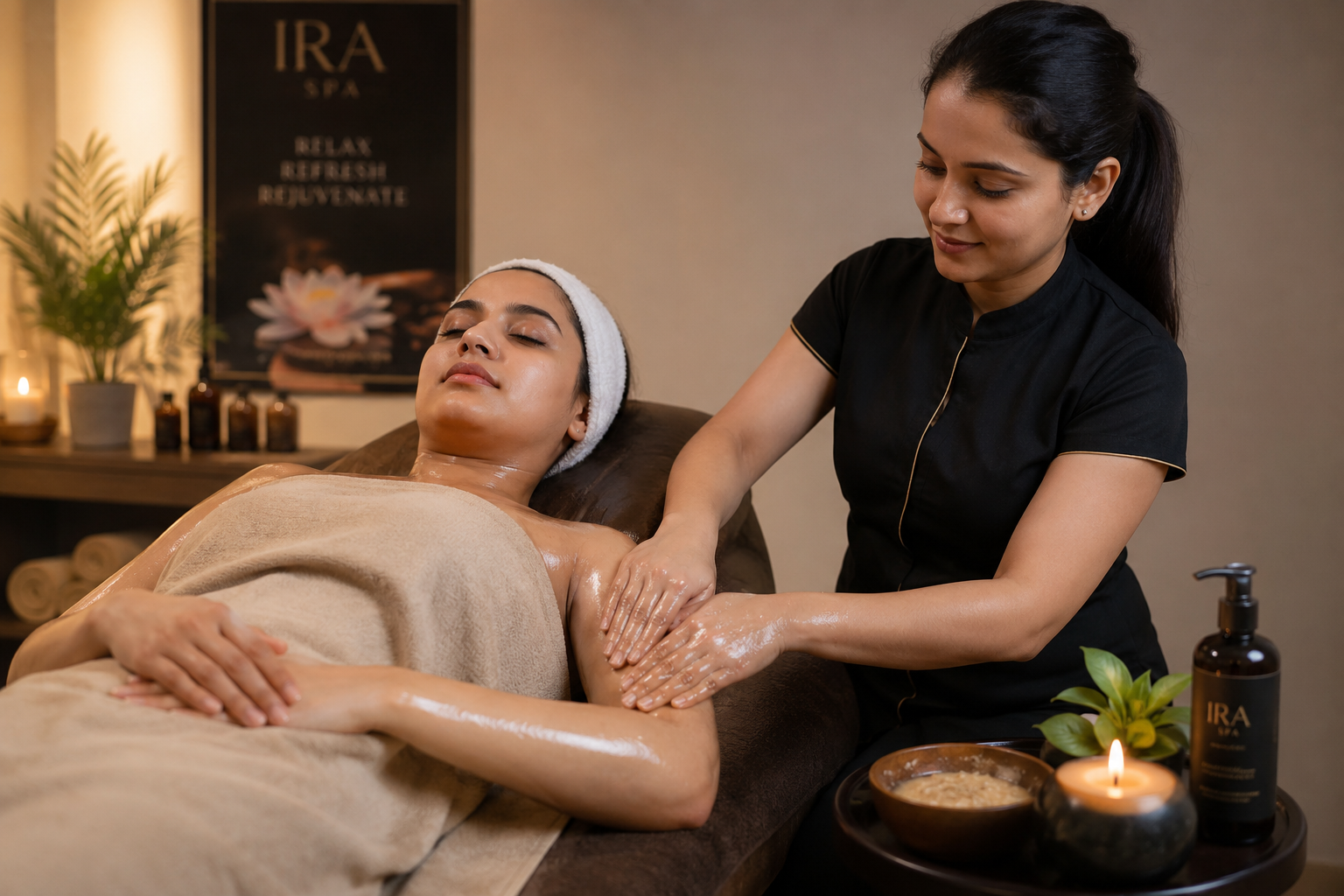
It’s entirely possible to mix a basic salt or sugar scrub at home, and plenty of people do for quick maintenance between spa visits. But there’s a meaningful difference between a kitchen-counter scrub and a professionally formulated body polishing treatment. Spa-grade scrubs are calibrated for consistent granule size, blended with skin-appropriate oils and actives, and applied by a therapist who adjusts pressure and technique zone by zone across the body — lighter over thin-skinned areas, firmer over calluses. That kind of judgment is hard to replicate with a jar of sugar and olive oil at home, and it’s exactly what separates a scrub that leaves skin glowing from one that leaves it patchy or irritated. A therapist can also switch between salt and sugar mid-treatment, using a firmer scrub on the heels and a gentler one on the arms and back within the same session — something a single at-home jar simply can’t do. If you’re comparing spas or trying to figure out what a good facility actually looks like, our guide on how to choose the right spa for body polishing walks through what to check before you book.
If it’s your first time booking any kind of exfoliation treatment, it also helps to know what the session itself involves — from consultation to aftercare — which we cover in what to expect during your first spa visit.
Building Exfoliation Into a Regular Routine
Whichever scrub suits your skin, consistency matters more than intensity. Over-exfoliating with either salt or sugar, especially more than two or three times a week, tends to compromise the skin barrier rather than improve it. Most therapists recommend spacing full-body polishing sessions four to six weeks apart, with lighter touch-ups at home in between if needed. Pairing a body scrub session with a complementary, low-intensity treatment — a de-stress refreshment pedicure, for instance — is a popular way to extend the self-care routine without over-exfoliating already-fresh skin. Making exfoliation a regular part of your self-care calendar, rather than a one-off fix before an event, is also one of the habits we highlight in the benefits of visiting a spa once a month.
Conclusion
Salt and sugar scrubs both exfoliate, but they solve different problems. Salt is the stronger option for rough, calloused areas and skin that can tolerate a firmer scrub, while sugar is the gentler, more hydrating choice for sensitive skin, the face, and everyday use — particularly through Mangalore’s humid, monsoon-heavy months when the skin barrier needs extra care. The honest answer for most people isn’t choosing one forever; it’s knowing which one your skin needs this week, and adjusting as the coastal Karnataka weather shifts through the year.
At IRA Spa in Kodialbail, Mangalore and Kalaburagi, every body polishing session starts with a quick skin consultation so your therapist can choose the right exfoliant — salt, sugar, or a blend of both — for your skin type and the season. Explore our full range of body and skin treatments or book your appointment at our Mangalore centre today.